SEO for Indie Hackers: The No-BS Guide to Getting Found in 2026
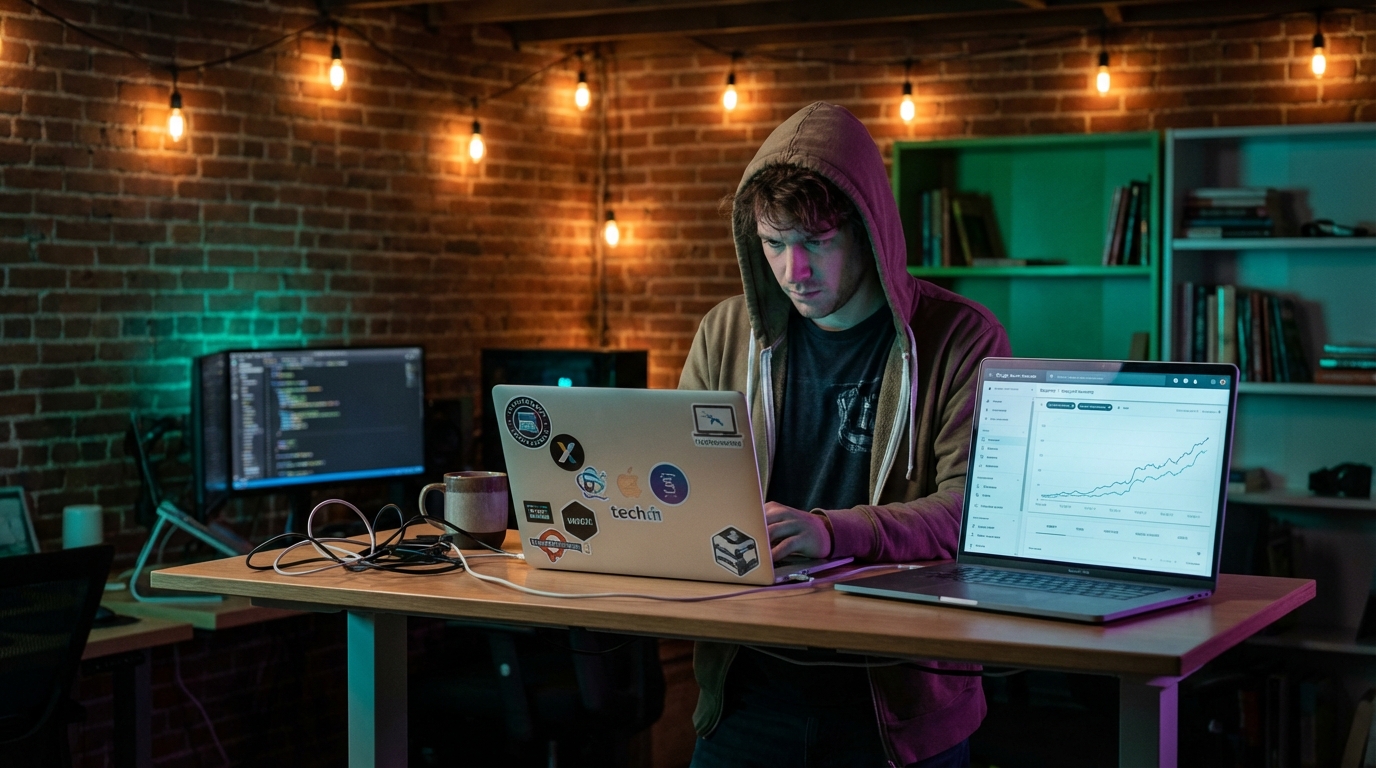
TL;DR: Most SEO advice is written for marketing teams with budgets. As an indie hacker, you need a different playbook — one that accounts for zero budget, zero team, and the new reality that discovery now also happens through AI engines. This guide gives you the minimum viable SEO stack that actually works for solo builders.
Key Facts:
- SEO is the only channel that gets cheaper over time — a post from month 1 still drives traffic in month 12
- Technical SEO foundation takes just 4 hours to deploy for a new project
Why Indie Hackers Ignore SEO (And Why That's Expensive)
You're a builder, not a marketer. You'd rather ship features than write meta descriptions. Totally get it.
But here's the math: every month you delay SEO setup, you lose compounding organic traffic. SEO is the only channel that gets cheaper over time — your blog post from month 1 still brings traffic in month 12 while you're sleeping.
The indie hackers who grow have one thing in common: they invested in distribution early, even when it felt premature. The Indie Hackers community — the founding hub for solo software founders — is full of post-mortems on the same lesson; outside the bootstrapped world, the Y Combinator essays library repeats it in different language. The shift toward AI-driven discovery is well-documented in Wikipedia's generative-AI overview and survives every framework change in Google's Search Central documentation.
Trying to figure out why competitors get cited and you don't? Try the AI engine competitor analysis tool.
The Minimum Viable SEO Stack (4 Hours Setup)
Hour 1: Technical Foundation
Deploy these files — they take 20 minutes total:
- robots.txt — Allow all crawlers (Google + AI bots)
- sitemap.xml — Auto-generated list of all your pages
- llms.txt — Plain-text file describing your app for AI engines
# YourApp — One-line tagline
# https://yourapp.com

New to AI search? Start with the [generative engine optimization guide](/blog/generative-engine-optimization-guide-2026).
### What is YourApp?
Two sentences about what it does and who it's for.

For the full citation-tracking methodology, read the [AI citation tracking guide](/blog/ai-citation-tracking-guide-2026).

Related: [SaaS Content Marketing Without Paid Ads: The Zero-Budget Playbook for 2026](/blog/saas-content-marketing-without-paid-ads) — covers saas content marketing without paid from a different angle.
## Key Features
- Feature 1
- Feature 2
Hour 2: On-Page SEO Basics
For every important page:
- Title tag — Include your primary keyword, under 60 characters
- Meta description — Compelling summary, under 155 characters
- H1 — One per page, matches the search intent
- Internal links — Every page links to 2-3 other relevant pages
Hour 3: Your First Blog Post
Write one post targeting your most important keyword. Structure:
- H1 = the exact search query people type
- TL;DR block in first 60 words
- 5-7 H2 sections answering sub-questions
- FAQ section with 3 questions (add FAQPage JSON-LD)
- CTA at the bottom
Hour 4: AI Search Optimization (GEO)
This is the 2026 cheat code most indie hackers don't know about:
- Create markdown twins for your top pages (
/content/page-name.md) - Add JSON-LD schemas (Article, FAQPage, SoftwareApplication)
- Add TL;DR answer blocks — the content AI engines quote when citing you
- Link everything in your llms.txt
Want to compare GEO tools side-by-side? See our best AI visibility tools ranking.
Keywords That Work for Indie Hackers
Don't compete with Hubspot for "best CRM software." Target long-tail keywords that match indie hacker intent:
| Keyword Pattern | Example | Why It Works |
|---|---|---|
| "how to [problem]" | "how to track AI citations" | Tutorial intent, low competition |
| "[tool] for [niche]" | "SEO audit for indie hackers" | Buyer intent, specific audience |
| "[problem] [year]" | "organic traffic drop 2026" | Timely, low competition |
| "best [category] for [audience]" | "best tools for solo founders" | Comparison, high intent |
| "[alternative] vs [alternative]" | "GEO vs SEO" | Decision-stage, high conversion |
Deeper look at how LoudPixel checks ChatGPT, Perplexity, Gemini, Claude, Google AI Overviews and Grok — and whether an AI agent could then complete a purchase from you: what each engagement includes.
The Indie Hacker Content Calendar
Publish one post per week. Alternate between these types:
- Week 1: How-to guide targeting a golden keyword
- Week 2: Problem-aware post ("Why X isn't working")
- Week 3: Data-driven post with original insights
- Week 4: Industry comparison or framework post
After 3 months, you'll have 12 posts covering your keyword territory.
Ready to find out which of the 6 engines name you? See what each engagement includes.
SEO Mistakes Indie Hackers Make
- Waiting for "the right time" — There's no right time. Deploy the basics on day one.
- Targeting broad keywords — "project management tool" is a crowded keyword. Go specific.
- Ignoring AI search, which Gartner forecast would cut traditional search engine volume 25% by 2026 (Gartner forecast) — Competitors who deploy llms.txt and GEO optimizations today will own the AI discovery channel for your category.
- Building features instead of distributing — Feature #47 won't save you. Getting found will. Combine SEO with social listening for lead generation to surface warm buyers on Reddit, LinkedIn, and 13 other platforms while your content compounds.
- No internal linking — Each page makes other pages stronger. Link them together.
See where you stand: send your site and three buyer questions — I will tell you within a day whether an audit is worth your money, and sometimes the answer is no.
FAQ
Is SEO worth it for a side project? If you plan to keep the project alive for 6+ months, absolutely. SEO compounds — the work you do today pays off for years. A single well-ranked blog post can drive visitors every month, indefinitely.
How long before SEO works for a new site? For a brand new domain, expect a wait for first rankings on low-competition keywords. AI citations via GEO come faster. The combination of SEO + GEO is more powerful than either alone.
Should I use AI to write my blog posts? AI can help draft content, but the posts that rank best contain original insights, first-party data, and genuine expertise. Use AI for structure and speed, but add your unique perspective and real data.
Related guides:
- How to promote your app in 2026 — the full distribution playbook for solo founders
- AI SEO audit checklist — 43-point checklist covering SEO + AI readiness
- How to get traffic to your SaaS — organic growth beyond SEO
Run a free SEO + AI visibility audit →
Your buyers ask AI. Does it name you — and can it buy from you?
A LoudPixel audit answers both, read by a person.
Written with AI assistance and reviewed by LoudPixel for accuracy.
Want your own site checked?
One LoudPixel audit answers both questions: whether AI names you, and whether an AI agent could buy from you — read by a person, with the fixes ranked.